
By Marc Kavinsky, Lead Editor at IoT Business News.
Identiv has expanded its ID-Tiny family of ultra-miniaturized HF/NFC tags and inlays, targeting products and components where conventional RFID formats are difficult to integrate. The move is relevant for OEMs and brands looking to add authentication, lifecycle visibility or user interaction to very small physical objects.
Many IoT deployments still stop at the point where the object becomes too small, too curved, too valuable, or too design-sensitive to carry a conventional identifier. That constraint is particularly visible in healthcare instruments, luxury accessories, cosmetics packaging, compact electronics and pharmaceutical containers, where the commercial need for digital identity exists but the available surface area often does not.
Identiv is addressing that gap with an expansion of its ID-Tiny portfolio, a family of HF/NFC inlays and tags designed for ultra-compact applications. The company says the expanded range is intended to bring secure digital functionality to products such as jewelry, eyewear, surgical instruments, pharmaceutical vials, wireless earbuds and personal care product caps without changing the object’s look, feel or function.
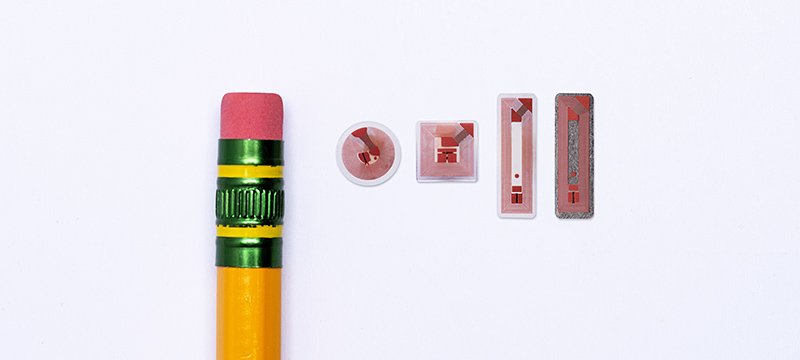
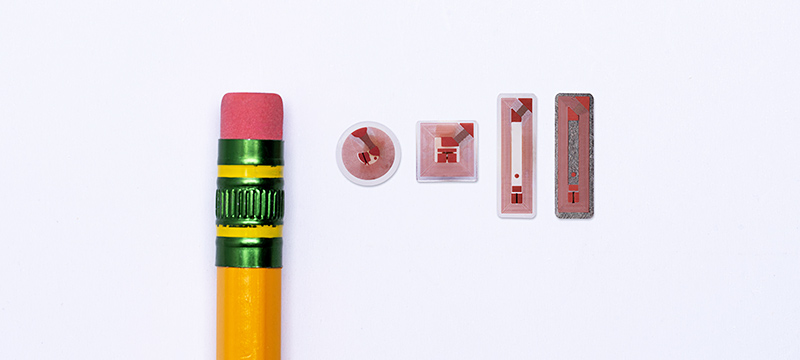
The announcement is not simply another RFID portfolio refresh. What makes it distinct is the focus on miniature HF/NFC formats as a design problem rather than only a tagging problem. Identiv says the portfolio now includes eight distinct tags across multiple form factors, with label sizes smaller than a pencil eraser. That gives product teams more options when the challenge is not whether RFID can technically identify an item, but whether the tag can be physically and aesthetically embedded into the item at all.
The tags support ISO15693 and are compatible with IC technologies including NXP ICODE 3 and STMicroelectronics ST25TV. For integrators, that matters because ultra-small form factors can otherwise create a fragmented engineering exercise, with each product requiring custom validation around materials, surfaces and read behavior. A portfolio approach, combined with mainstream IC support, can reduce the amount of redesign needed when moving across related product categories.
Why miniaturization matters for item-level IoT
In the IoT market, item-level intelligence is often discussed in terms of cloud platforms, data models and analytics. But in many applications, the first bottleneck is more physical: can a secure identity be attached to the object in a way that survives normal use and does not interfere with the product? Identiv’s ID-Tiny expansion sits at that foundational layer of the stack.
The practical value differs by sector. In luxury goods and fashion, Identiv positions the tags for digital certificates of authenticity, ownership verification, warranty registration, insurance activation, Digital Product Passport compliance, and protection against counterfeiting or gray market diversion. In healthcare, the same class of tag can support surgical instrument tracking, sterilization cycle monitoring, medical consumable authentication, pharmaceutical vial tracking and patient-facing digital instructions. For consumer electronics and smart home products, Identiv points to product pairing, accessory verification, replacement part authentication and lifecycle service support.
There is an important deployment implication here: HF/NFC tagging of this kind is best aligned with verification, tap-based interaction and controlled item-level processes, rather than continuous telemetry or long-range tracking. That distinction is useful for OEMs and system integrators. A tiny HF/NFC tag can create a reliable digital identity at the point of inspection, service, purchase or use, but it does not replace active wireless technologies where real-time location or sensor streaming is required.
Identiv also emphasizes support beyond the tag itself, including encoding and personalization services, application testing, rapid prototyping and scalable manufacturing capacity. That is particularly relevant in miniature RFID deployments, where RF performance can be more sensitive to placement, packaging materials and object geometry. The smaller the tag, the less room there is to compensate for poor integration choices later in the design cycle.
For OEMs, the expanded range may make it easier to evaluate HF/NFC identity earlier in product development instead of treating it as a packaging add-on. For brands, it opens more discreet routes to authentication and post-sale engagement. For system integrators, it creates additional options for projects where item size has been the limiting factor. Connectivity providers are less directly affected, but the announcement reinforces a broader trend: not every connected-object strategy begins with a network subscription. In many high-value or regulated use cases, the first step is simply giving the physical item a secure, readable identity.
Identiv says the ID-Tiny product family is available now.

Leave a Reply