

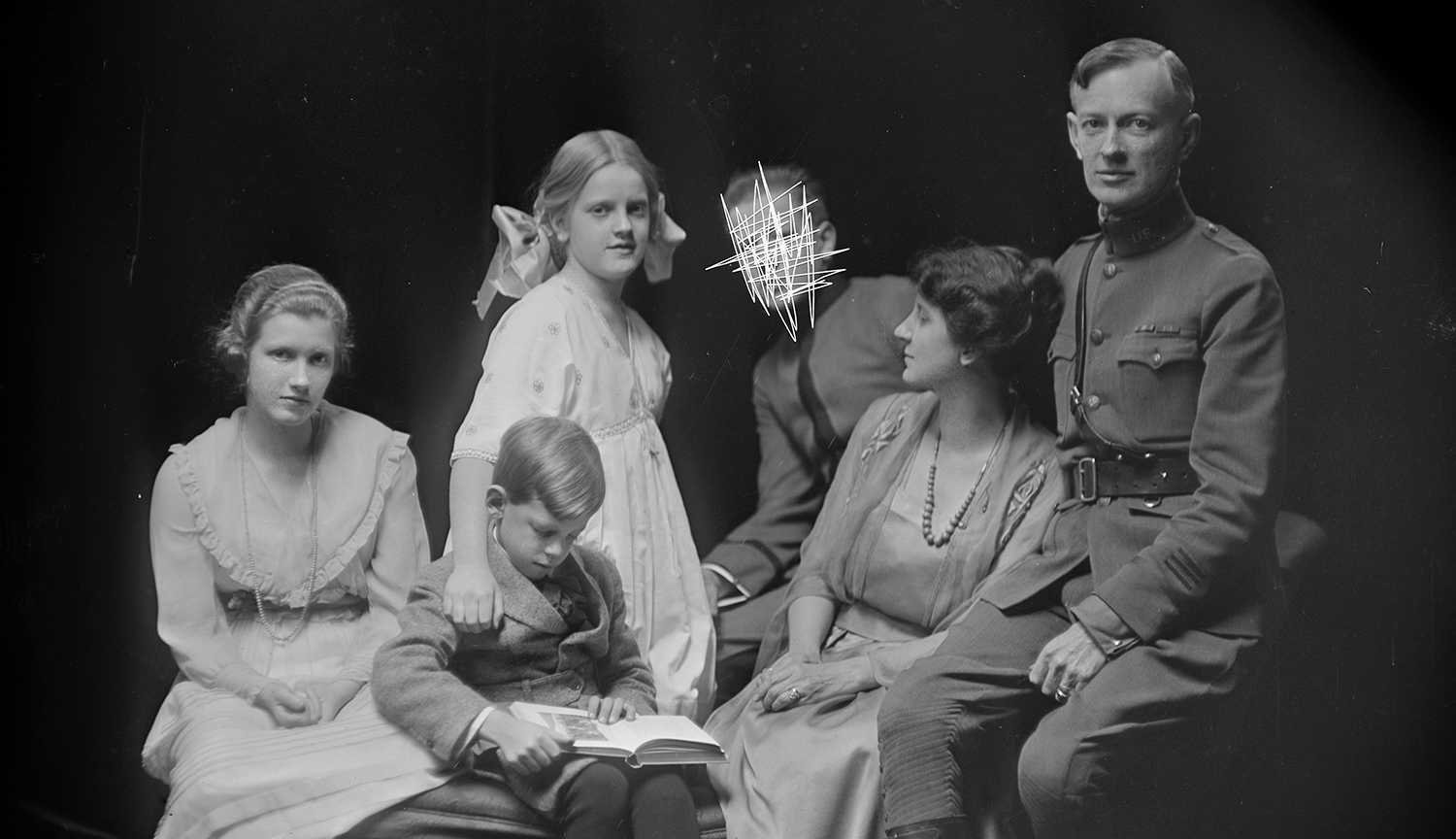
Adult children vs. parents, siblings vs. siblings — calling quits on one’s kin seems increasingly common.
In a 2025 YouGov poll of 4,395 US adults, nearly 4 in 10 respondents said they “no longer have a relationship with” one or more immediate family members. An episode of the Oprah Podcast on the “culture of estrangement” brought the topic home to millions of listeners.
While polls, social media and news of high-profile celebrity splits highlight the prevalence and pain of family breakups, researchers’ growing but still limited attention has yet to quantify how much they’ve multiplied. There are, however, plenty of potential drivers in today’s divorce rates, political polarization, rising individualism, reliance on therapists and social media memes about toxic relationships, says Joshua Coleman, an author, researcher and psychologist in private practice in the San Francisco Bay Area.
It all comes at a time when more Americans are prioritizing mental health — and when the internet is helping people find connections outside the family, he adds.
“In just the same way that divorce has become destigmatized, estrangement has become destigmatized,” Coleman contends. “There’s a social contagion, particularly on sites like Instagram and TikTok, that characterizes this act of cutting ties as a way of asserting one’s identity and protecting mental health.”
Coleman, who has written two books on estrangement and collaborated on two national surveys on the subject, including a 2024 Harris Poll, has become a leading authority on a trend that can elicit such deep shame and discomfort that researchers often struggle to get people to discuss it.
The following conversation has been edited for length and clarity.
You’ve described family estrangement in the US as an epidemic, and it’s clear you don’t think that’s a positive. Why?
It fractures an already fractured society. We become more tribal and more isolated. The family is such an important locus of identity and self-esteem and mental health that putting it on the chopping block is wrongheaded. This high level of estrangements leaves older people without care and younger people without resources. We’re leaving the state to take over the space where family members used to help each other out, even as the state does a frankly shitty job of that.
What’s causing all these rifts?
It depends whom you ask. If you look at the surveys of adult children, they’ll say that the biggest reason is emotional abuse and maybe values differences, whereas parents are more likely to blame their divorce, their child’s marriage or their child’s therapy. Researchers have found radical differences in these different perspectives.
We do know that parents’ divorce is associated with a high risk of estrangement. When I surveyed more than 1,600 estranged parents in 2020, I found about 70 percent of them became estranged from a child after divorcing the other biological parent. That’s really high, but maybe not surprising. Divorce can radically realign family ties and perceptions. A child who long thought of the family as a singular unit may now see it as a loose affiliation of individuals. And, of course, when the divorce is acrimonious, kids may feel they have to side with one parent against the other. Remarriage is also a risk, because the adult child may feel displaced by the new siblings or step-siblings, or they may not like the new wife or husband.
An adult child’s marriage can also be a flashpoint. In 2019, I collaborated with researchers on a survey of 1,035 mothers who were estranged from at least one child. The mothers were recruited from an email discussion list of people who sought support and help with their estrangement, so it was a selective sample. The majority blamed outside factors — i.e., not their own actions — for the split. Seventy-eight percent said the estrangement happened after the child was married or became involved with a partner.
This is something I see a lot in my practice, where a daughter-in-law or a son-in-law appears to cause a rift. I call it “the cult of one,” where the new partner becomes the sole interpreter of his or her spouse’s past and present. Suddenly, the adult child comes to believe he or she has had a long history of problems with the parent.
Yet another strong factor these days is politics. In the Harris Poll, 42 percent said politics was the biggest factor driving family members apart.
It’s the kids who are mostly initiating these estrangements, correct?
That’s true. We don’t have good research on the parents, but we know they are in the minority, and that it’s usually for religious reasons or they disapprove of the child’s gender identity or maybe the person that they’ve married, or their values.
Why do you think parents are so much less likely to cut off their kids than kids are to cut off their parents?
Sociologists use the phrase “the intergenerational stake,” to convey the idea that when you’re raising your children you make a big investment, in part in the interest of furthering your genetic line. That can lead parents to assume that when they raise children, they will be close to them throughout their lifetime. Yet that’s obviously not how it is for most kids. This may help explain why a classic study in 1999 showed that parents of young adult children reported closer relationships and fewer problems than the children perceived.
What I often tell parents is that by the time we have adult children and grandchildren, they are front and center of our minds, whereas for adult children that’s not the case. I wouldn’t expect my adult children to think about me as frequently as I think about them. There’s a great asymmetry of investment.
You seem to have a great deal of empathy for the parents in this situation, but maybe less for the adult children?
The impacts are just very unequal. There can be some big upsides for the adult child. Certainly, some parents are hopeless, destructive people because of mental illness or addictions or their own unworked-through traumas. Researchers interviewing adult children report many stories of mistreatment including abuse, betrayal and general poor parenting. And in general, the adult child may feel the upside of, “Now I’m protecting myself. I’m prioritizing my mental health or my marriage or my identity.” It’s all tied to these very Western individualistic ideals around autonomy and agency, and there’s clearly value in that
But there’s nothing like that for the parent. For the parent, there is so much shame, loss, grief, distress and social isolation. Even in cases where the child is abusive, there’s a lot of suffering and shame. The parents may feel some relief if the kid is not in contact because they don’t have to worry about them stealing from them or abusing them, but they’re still burdened with enormous worry.
I don’t feel like the culture’s yet reckoned with how much we are wrongly blaming parents. We’re still in a time where people assume that if you have problems in adulthood, it’s largely your parents’ fault.
So am I more sympathetic to the parent’s plight? If I have both people in therapy, I’m equally sensitive because I know that the adult child is struggling with something profound and deserves empathy, or they wouldn’t have cut off the parent in the first place. So in that therapy environment, if anything, I’m more committed to the adult child because I know that unless they feel understood by the parent, they’re far less likely to want to reconcile.
In one Australian study, of 25 adult children who initiated or maintained estrangement from one or both parents, the interviewees described the break as the “only avenue to personal growth, healing and happiness.” How many estranged adult children get to that place?
Lots of the kids do report feeling less stressed, but whether their concrete mental health is better is an open question. Yes, they’re avoiding conflict, and may feel relief and resolution, but it comes with a degree of shame and loss and guilt — and a lot of uncomfortable ambivalence, including, often, loss of financial support and connection to family history and contact with other relatives.
You’ve written about your own experience with estrangement….
My daughter was a toddler when I divorced from her mother, but she didn’t speak to me for several years in her early twenties, in part feeling like I prioritized my second marriage over her. It was, beyond doubt, the worst, most painful challenge I’ve ever faced.
One thing I’ve noticed that seems to particularly bother you is therapists’ role, in cases where they may be encouraging adult children to cut off contact with a parent.
Therapists can do a lot of damage. We might encourage a parent to cut a child out of a will without having that parent consider how much he or she may have contributed to conflict with that child. Or we can side with an adult child who wants to end a relationship with a parent without being sensitive to the repercussions for that client and the parent and possibly grandchildren.
I don’t believe there’s research on this topic, but I do think that therapists are a big agent of estrangements, and I would like to see my field be much more strict about diagnosing people who aren’t in the room.
When we diagnose someone we don’t know, we depersonalize that person. When we call them emotionally immature or narcissistic or borderline or a gaslighter or a boundary-crosser, we make them seem irredeemable, and decrease the chance of the adult child wanting to work on the relationship. I’ve had more than one adult child say, in a hopeful tone, “Do you think my mother’s a narcissist?” They want to hear yes, because it helps them not feel guilty about having the distance they want or need.
Surveys show siblings are the most likely to be estranged — why is that?
It’s not that they’re most at risk, but just statistically there’s more of them.
As for the causes, it can be due to a long unresolved history of sibling rivalry — the idea that one sibling got preferential treatment, even if objectively they didn’t.
A history of sibling abuse can certainly be a factor. But it could also be that one sibling’s life has simply turned out better, while another had a failure to launch.
I don’t believe studies so far have looked at whether one kid may have been more vulnerable to mental illness in the first place, which may have caused him or her to view the world in a much more negative way that increased their likelihood of a later estrangement.
How common is it for the estrangements to be repaired?
Sociologist Rin Reczek’s research out of Ohio State University has found that 81 percent of mothers and 69 percent of fathers eventually reconcile with their child. That sounds high to me, but if that’s the case, it’s reassuring. It’s not unusual, I think, for estrangers to resume relationships, even temporarily.
What might help increase the chance of repair?
One of the ways that I think about this is that a close parental-child relationship is a psychological achievement on both sides.
As a culture, we have undergone a major shift over the last several decades. Families have become a lot more egalitarian. Children are encouraged to be more autonomous vs. simply obedient. Families have also become closer; Pew research has found most parents say their young adult children know them well, are in closer contact and depend on them, which is a change from prior generations.
In this context, it takes a certain amount of psychological health, emotional intelligence, and an ability to self-reflect and empathize to be an adult child and not feel so enmeshed with your parent or dependent on them or reactive to them that you’re devastated if they say something obnoxious.
It also takes a great deal of psychological health for the parent to see your kid as somebody with their own life and needs, and not be undone by the fact that they get a vote about who you were as a parent and who you are as a person. For a lot of parents, it’s still kind of new that they can’t just insist on a relationship, or guilt trip their kid, or remind them that just the year before they’d sent a card saying, “You’re the best mom ever.”
And so, it’s not surprising that so many parents are lost. Their kid says: “You emotionally abused me.” They’re like, “The hell I did.”
What do we know about the most promising behaviors for a parent who wants to become “un-estranged”?
In my polling, I’ve definitely found great benefits for parents who write a letter of amends, in which they acknowledge their adult child’s feelings and take responsibility for harm they may have caused. It requires them to honestly acknowledge what they did or didn’t do that was hurtful, and their willingness to hear what the child has to say and try to modify their behavior. I have found this is the biggest predictor for those who eventually reconcile.
Parents who write an “amends letter” improve their chances of restoring the relationship — Joshua Coleman explains how.
CREDIT: PARENTAL ALIENATION ADVOCATES
By the way, why are the statistics on this topic so varied? I’m seeing numbers ranging from 15 percent to 38 percent in reference to people experiencing estrangement.
People are defining it differently. The developmental psychologist Lucy Blake, who is a leader in this field, noted this problem in her review in 2017, as one of the things that makes it so hard to talk about. When you study estrangement, do you include only the nuclear family, or broaden out to more distant relatives?
Karl Pillemer at Cornell University published a survey in 2020 that found that 27 percent of Americans 18 and older had cut off contact with a family member, but he included aunts, uncles, grandparents, nieces and nephews. In the Harris Poll we did in 2024, 35 percent of the 1,068 US adults surveyed said they were estranged from an immediate family member such as a parent or a sibling.
Then there’s the question of whether you include relationships that have significantly worsened, or limit it to cutting off contact? Kristina Scharp, a researcher specializing in communication, has described estrangement as existing along a continuum, with fluctuating components that could include communication quality and quantity, physical distance, presence or absence of emotion, and even taking legal action.
I would define estrangement as a pretty formal cutoff involving members of the immediate family. If it’s an adult child, maybe they send a birthday card once a year. But otherwise, it’s pretty much no contact.
What major questions do you wish researchers would explore on this topic?
I can think of a few. Are adoptive parents more at risk of later estrangement? I think they are, but I don’t think there’s any research yet.
Another is if the death of a parent or the death of a sibling increases the risk of estrangement. More research on that would be really useful.
The more we know about the causes and effects of estrangements, the more we can help and empathize with those involved. I’d also like to see more understanding of the long-term effects of grandparent estrangement. Typically, if the adult child cuts off the parent, they cut off access to the grandchildren as well. Is that a traumatic event in the grandchild’s life? I would argue that it is, but there’s not really any research about that.
If estrangement is as common as these polls suggest, and as negative as you suggest, what would you change in systems that touch families, such as schools, health care and family courts?
I would wish that people who are going to divorce have a lot more counseling about how to protect their children from a later alienation, because divorce is such a common pathway.
But I think the biggest problem is really American-style individualism, and a preoccupation with the self and personal growth and personal happiness.
Sociologists have documented the relationship between the decline in social cohesiveness and reduced community feeling beginning with Gen X, which I think includes reduced levels of a sense of obligation to the family.
The US has the highest or very close to the highest degree of individualism among Western countries. Then add in all these social media amplifiers, and the way that estrangement has become kind of fashionable. So, what do you do about that?
Do you see any hope that things will improve, that we’ll get better as a society at strengthening and maintaining these fragile family ties?
Yes. I’m considering writing something about this, because I think we’re at
an inflection point. Parents being estranged today are really the first generation that’s had to do this kind of emotional work, to be so self-reflective and curate their own childhood and history. My generation wasn’t making our parents do that. Or rather, I did ask my parents to do something like that once, and they got completely defensive about it, so I backed off.
I think younger generations are more psychologically literate, and perhaps will be able to communicate with their own kids in a way that the adult child needs, and that their parents weren’t able to do. So I do anticipate a decrease. Still, I think there’ll always be estrangements for other reasons, such as a problematic son-in-law or daughter-in-law, or mental illness on the part of the parent or the adult child, or bad therapists, or all the reasons we’ve discussed.
But I do have faith that parents can start to respond more productively. I get letters every day saying, “Oh, if I’d only read your book before” – and it’s not because there’s anything that’s secret in my book, except to say just be empathic and take responsibility and don’t defend yourself.
Younger generations may feel like they can control this and be better parents and their kids would never do what they did to their own parents. And they may have a big comeuppance in realizing that just because you have those skills, it doesn’t insulate you from all the other ways you can become estranged.

Leave a Reply